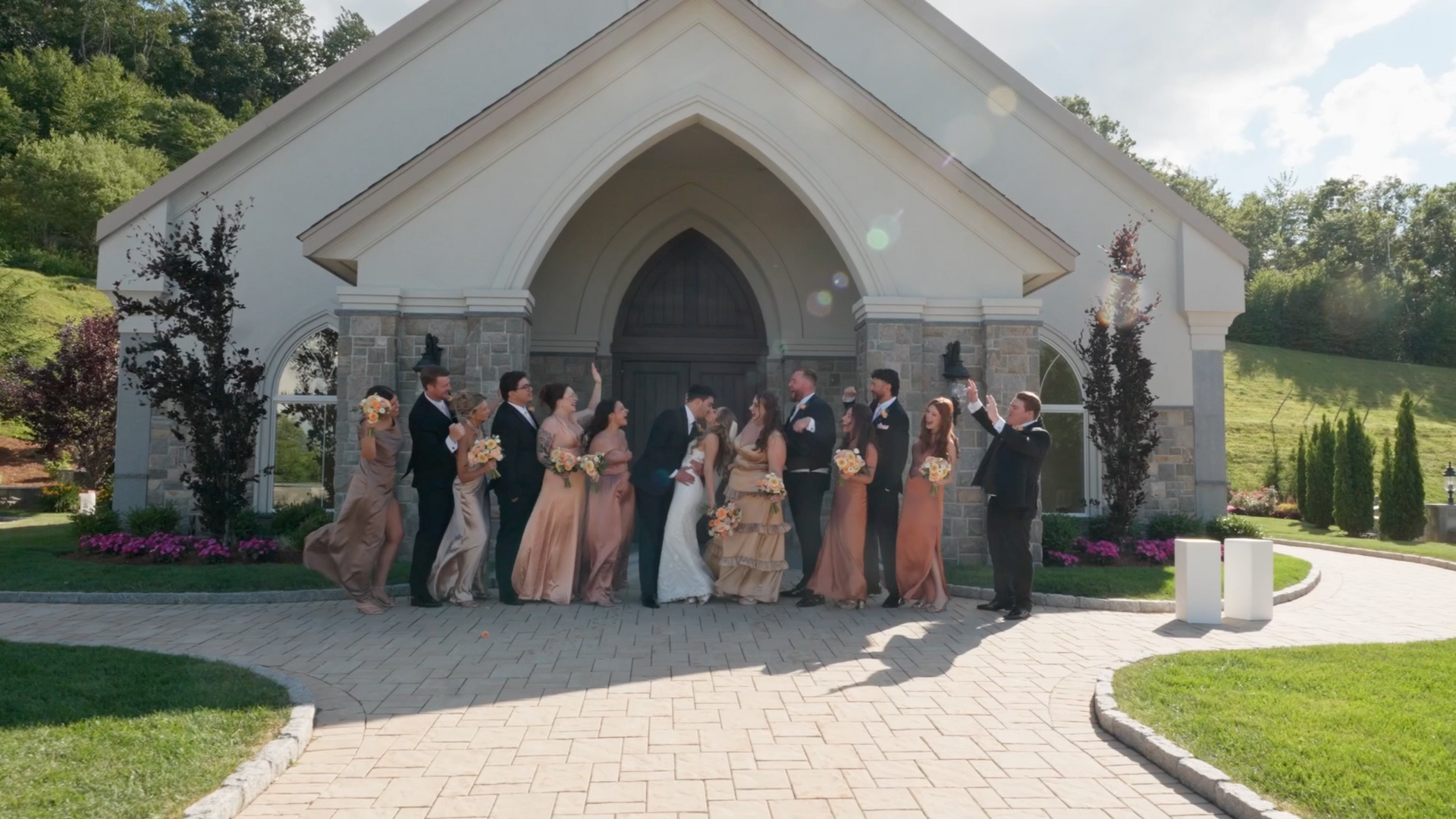
How to Build a Wedding Day Timeline That Leaves Room to Be Present
•
Most couples think of the wedding day timeline as logistics. When hair and makeup ends, when the ceremony starts, when dinner is served.
It is that. But it also decides something bigger: how the day feels while you're living it.
A timeline that's too tight shows up in the photographs. Portraits get rushed, cocktail hour disappears, and you spend the day being moved from one thing to the next.
A timeline with room in it does the opposite. You finish the conversation. You take a breath before you walk down the aisle. You notice what's happening around you.
After documenting more than 250 weddings and events, we've seen the same thing again and again. The strongest galleries and films come from days that had room in them.
Start With What Matters Most
Before anyone opens a spreadsheet, answer one question together: what do you most want to remember?
For some couples it's the quiet of getting ready with a parent. For others it's a full cocktail hour with friends who flew in, or portraits at sunset on the venue grounds.
Your answer shapes everything after it.
If being with your guests matters most, a first look moves most portraits before the ceremony and gives cocktail hour back to you. If seeing each other for the first time at the aisle matters most, we plan a longer window after the ceremony and keep the family list tight.
Neither choice is wrong. They simply need different timelines.
How Much Time Photos and Film Need
Every wedding is different, but these ranges hold up well for most celebrations:
- Details and getting ready: 60 to 90 minutes. Invitations, rings, attire, and the final touches. We like to arrive while hair and makeup is finishing, not after.
- First look and couple portraits: 30 to 45 minutes. Enough time to react to each other before any direction begins.
- Wedding party: 20 to 30 minutes. Allow more for larger groups.
- Family portraits: 20 to 30 minutes. Plan two to three minutes per grouping.
- Ceremony setup: 30 minutes before guests are seated. Cameras placed, microphones tested, positions agreed with your officiant.
- Sunset portraits: 10 to 15 minutes. A short step away from the reception during the best light of the day.
Add up the portrait blocks and you're looking at roughly an hour and a half to two hours across the whole day.
Spread out well, it never feels like that much.
Plan Around the Light
Light is the one part of your timeline that can't be moved.
In New York, New Jersey, and Connecticut, sunset falls around 4:30 pm in early December and close to 8:30 pm in late June. That four-hour swing changes how the whole day should be built.
A 5:00 pm ceremony in June leaves plenty of daylight for portraits afterward. The same ceremony in November ends in the dark, which makes a first look the only way to have natural-light portraits at all.
Look up the sunset time for your date and venue early, then work backward.
The most flattering light arrives in the last hour before sunset. Ten minutes outside during that window can give you some of the strongest portraits of the day.
Build In Room for the Unexpected
Hair and makeup runs long. A boutonniere goes missing. Traffic on the Hutch or the Merritt does what it does on a Saturday.
None of this is a problem when the timeline expects it.
We suggest 10 to 15 minutes of buffer around each major transition and generous travel estimates between locations. If the map says 25 minutes, plan for 40.
Buffer time is never wasted. When everything runs on schedule, it becomes the quiet moment you didn't know you'd have: a few minutes alone together, a drink with your wedding party, a look at the reception room before the doors open.
What a Wedding Film Needs That Photographs Don't
If you're having a wedding film made, the timeline has a few extra jobs.
Audio is the big one. Vows, toasts, and letters read aloud are what turn footage into a story, and capturing them cleanly takes preparation.
We need a few minutes before the ceremony to place microphones on your officiant and on one of you. We need a few more before the reception to connect with your DJ or band's sound system.
It also helps to know when speeches will happen. Toasts planned for one point in the reception are easier to cover well than toasts scattered across the evening. Your team is in position and the room's attention is in one place.
If you plan to exchange letters or private vows, tell us ahead of time. Those few minutes are often the emotional center of a film, and they deserve a quiet room and an unhurried window.
When photography and film are both part of your day, it matters that the two teams share one plan. We wrote more about that in Why Photographer & Videographer Teamwork Matters on Your Wedding Day.
Keep the Family Portrait List Short and Specific
Family portraits are where timelines most often slip.
The fix is a written list, agreed before the wedding. Around ten groupings fits comfortably in a 30-minute window.
Name the people in each grouping instead of writing "bride's family." Then ask one person from each side who knows the faces to help gather everyone.
Tell family members in advance where to be and when. Five minutes spent searching for an uncle is five minutes taken from your cocktail hour.
Questions to Ask Your Photo and Film Team
Before you finalize your timeline, ask your photographer and filmmaker:
- When should our ceremony start for the best light on our date?
- Do you recommend a first look for our day, and why?
- How much time do you need for family portraits, and how should we prepare our list?
- When do you arrive, and what do you need from us before the ceremony?
- How do you capture audio for vows and toasts?
- Will you review our timeline with our planner or venue coordinator before the wedding?
- What happens if we run behind?
Their answers will tell you how they plan, and how calm they'll be when the day arrives.
How AlphaScape Studios Approaches Timeline Planning
At AlphaScape Studios, timeline planning is part of how we work with every couple. It starts at the consultation, well before the wedding day.
We review the day with you, look at the light for your date and venue, and find where the timeline needs more room.
When we're covering both photography and film, our team works from one plan, so you're never directed twice for the same moment.
Then, on the day itself, we keep an eye on the clock so you don't have to.
That's what we mean by feel present, remember everything. A day you were fully part of, and photographs and a film that bring you back to it.
If you're starting to plan, our free Wedding Timeline Starter Guide is a good first step.
And if you'd like to talk through your date, your venue, and what you want to remember most, book a consultation. We'd love to hear about your day.
Planning Your Wedding?
Every detail of your wedding day deserves to be remembered beautifully. Let's talk about your vision, your venue, and how we can capture it all — naturally, elegantly, and without the stress.
Continue Reading